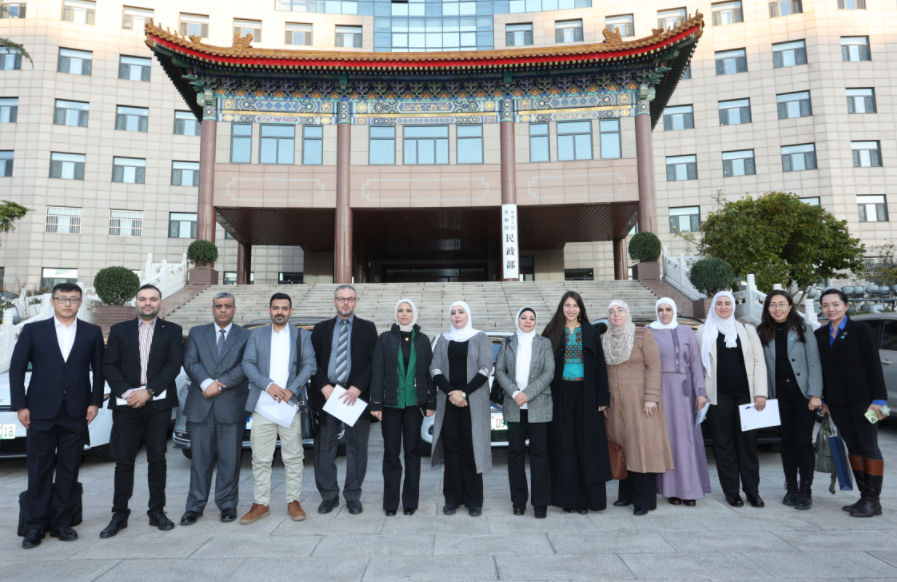
From 25 to 30 October 2025, the World Food Programme Centre of Excellence for Rural Transformation (WFP China COE), in collaboration with WFP Jordan Country Office, organized a South-South study tour for a delegation from the Government of Jordan to China. The visit served as an opportunity for constructive engagement with Chinese counterparts on China’s national mechanisms and practices in shock‑responsive social protection (SRSP), enabling the delegation to explore experiences that may inform the implementation of Jordan’s 2025-2033 National Social Protection Strategy (NSPS).
Jordan’s NSPS positions SRSP as a core element of its resilience pillar, aiming to ensure that the national social protection system can anticipate and respond to shocks in ways that safeguard human capital development. As the country faces increasing climate‑related risks—including drought, heat stress, and floods—strengthening the system’s capability to manage climate shocks has become a government priority. Although Jordan has strengthened its social assistance programs and national preparedness mechanisms in recent years, SRSP remains an emerging area that requires further institutional development.
The delegation included representatives from the Ministry of Social Development, Ministry of Agriculture, Ministry of Planning and International Cooperation, National Aid Fund, and the Meteorological Department. Throughout the week, they engaged with Chinese government agencies, technical institutions, academia, and civil society organizations to gain insights into China’s experience in integrating disaster risk management with social protection.
Scientific Approaches to Disaster Risk Management
In Beijing, the delegation visited key institutions within China’s emergency management system to understand the country’s multi-level coordination mechanisms for disaster risk management. These included the National Institute for Natural Disaster Prevention, the National Earthquake Emergency Rescue Training Center, the China Earthquake Networks Center, and the National Disaster Reduction Center.
Through these visits, the delegation observed early warning systems for multiple hazards, integrated satellite-based monitoring technologies, real-time data platforms, and scientific risk assessment tools that inform preparedness and response decisions. Delegation members also participated in interactive simulations and scenario-based exercises, gaining practical insights into emergency response procedures and community-level mutual assistance mechanisms.
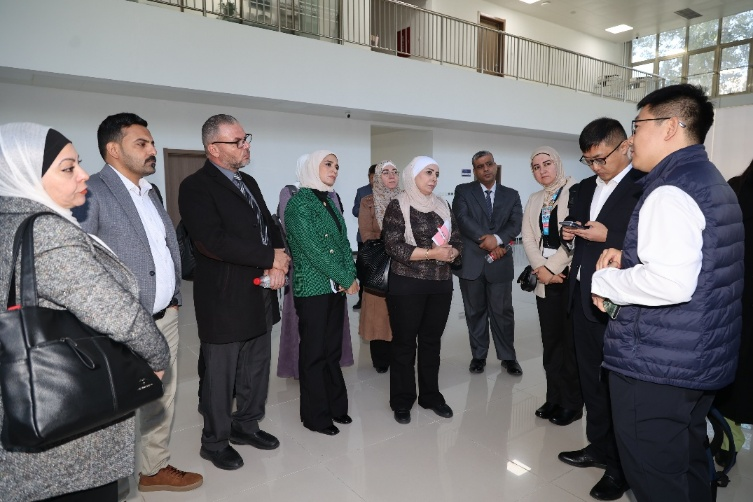
Visit to the National Institute of Natural Hazards on the drought early warning system
A hands-on earthquake rescue simulation provided a vivid demonstration of rapid response protocols and inter-agency coordination. China’s experience illustrated how early warning triggers captured by disaster risk management institutions can activate SRSP instruments, enabling anticipatory and early actions rather than reactive responses. Linking early warning thresholds to predefined social protection measures was highlighted as a key enabler of timely and predictable support to vulnerable populations.
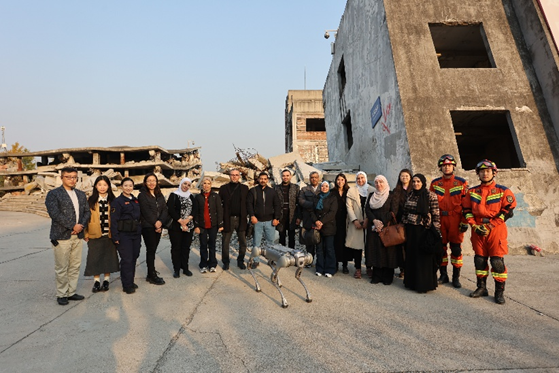
Simulation at the China Earthquake Disaster Prevention Center
Integrated Social Responsive Social Protection Systems
The study tour also explored how China embeds the shock responsive elements within its social assistance and social insurance programmes. Discussions focused on system architecture, institutional mandates, and the importance of integrating shock-responsive elements throughout the programme cycle. Institutional linkages between early warning triggers and activation of social assistance responses were underscored as the activator for the social protection response based on climate risks.
China’s strong institutional coordination mechanisms between social protection and disaster risk management agencies, supported by clear roles, responsibilities, and data-sharing arrangements, enable faster and more predictable responses. These integrated systems demonstrate how institutional linkages can facilitate anticipatory action and reduce the impact of climate-related shocks on vulnerable households.
Community-Based and Multi-Actor Response Models
Beyond government-led responses, the delegation received an overview of community-based emergency response models through workshops involving NGOs, foundations, and volunteer networks. These sessions highlighted practical approaches to community-level emergency response, including disaster information monitoring and early warning, as well as mechanisms for coordination between governmental and non‑governmental actors. The models demonstrated how local actors collaborate to conduct rapid needs assessments, mobilize volunteers, and implement both immediate response and longer‑term recovery activities.
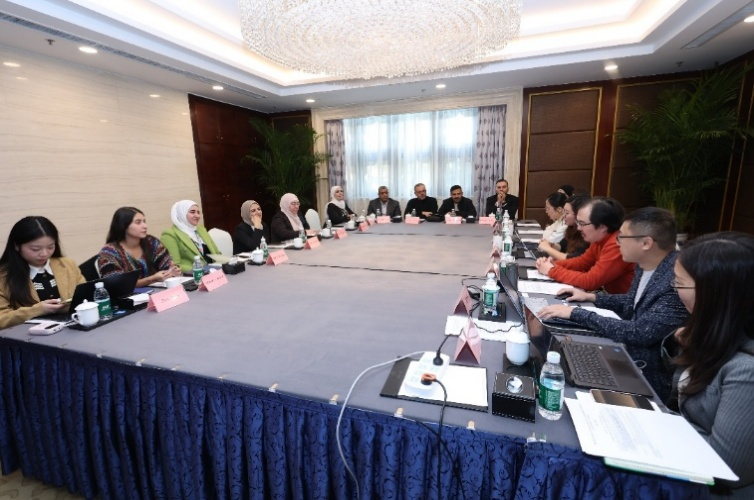
Workshop on community-based response mechanisms in China
The delegation also participated in a thematic workshop on “Shock‑Responsive Social Assistance: From Emergency Response to System Strengthening.” Experts from the China Social Security Society, Beijing Normal University, and the Red Cross Society of China presented China’s social assistance system, innovations in risk governance and resilience building, and disaster management coordination mechanisms. These exchanges provided the delegation with a systematic understanding of the institutional foundations and collaborative arrangements that underpin China’s emergency social assistance system.
Local-level experiences underscored the importance of information sharing, community preparedness, and coordinated actions among stakeholders. The role of volunteer networks and grassroots organizations in outreach, needs identification, and accountability was particularly relevant for Jordan as it seeks to strengthen community-level resilience.
Looking Ahead
The study tour deepened mutual understanding between China and Jordan and generated practical insights that can inform Jordan’s efforts to operationalize shock-responsive social protection under the National Social Protection Strategy. Delegation members identified several institutional and technical practices observed in China that hold potential value for adaptation in Jordan, including:
● capacity-building approaches such as simulation-based training facilities to strengthen staff preparedness.
● institutional arrangements including localized crisis and emergency response centres positioned close to communities to enable rapid and coordinated action.
● operational models such as multidisciplinary social field teams to support outreach, needs assessment, and service delivery.
● the integration of early warning systems with predefined social protection measures to enable anticipatory action.
● the use of digital and information technologies—including satellite‑based monitoring, public disaster information platforms, and emerging applications of digitalization and artificial intelligence—to enhance the speed, accuracy, and coordination of response.
Participants noted that China’s institutionalized crisis management architecture, characterized by clear mandates, coordinated structures, and dedicated agencies, offers useful reference points for strengthening Jordan’s national emergency response capacities. These insights provide a strong foundation for future technical collaboration, particularly in early warning systems, digital coordination, and capacity building for emergency preparedness. WFP will continue supporting both governments in translating these lessons into practical improvements that enhance preparedness, protect vulnerable populations, and reinforce national resilience to climate‑related and other shocks.