From 23 to 30 November 2025, the World Food Programme Centre of Excellence for Rural Transformation (WFP China COE), in collaboration with the WFP Côte d'Ivoire Country Office, facilitated a SouthSouth study tour to support Côte d'Ivoire's efforts to launch its national rice fortification initiative under the leadership of the National Council for Food and Nutrition (CONANUT). Given that deficiencies in essential micronutrients such as iodine, iron, folic acid, and vitamin A affect a large share of the population, Côte d'Ivoire has prioritized the fortification of staple foods as a key strategy to improve nutrition outcomes. Strengthening rice fortification is therefore central both for advancing national nutrition priorities and for mobilizing international privatesector engagement in advancing the implementation of the National Multisectoral Nutrition Plan.
The study tour aimed to strengthen millers’ ownership of the national rice fortification project by deepening their understanding of fortification mechanisms, identifying required equipment, inputs, and tools, assessing potential challenges, and engaging international private-sector partners, while also providing an opportunity to examine the rice value chain from production to processing and distribution. The delegation, led by Dr. Patricia YOBOUE N’GORAN, Advisor to the Presidency of the Republic and Coordinator of CONANUT, included representatives from key government ministries, millers, and staff from IFAD and WFP. Through workshops and field visits across Beijing, Hubei, and Jiangsu, the delegation engaged extensively with Chinese government departments, research institutions, and private‑sector actors.
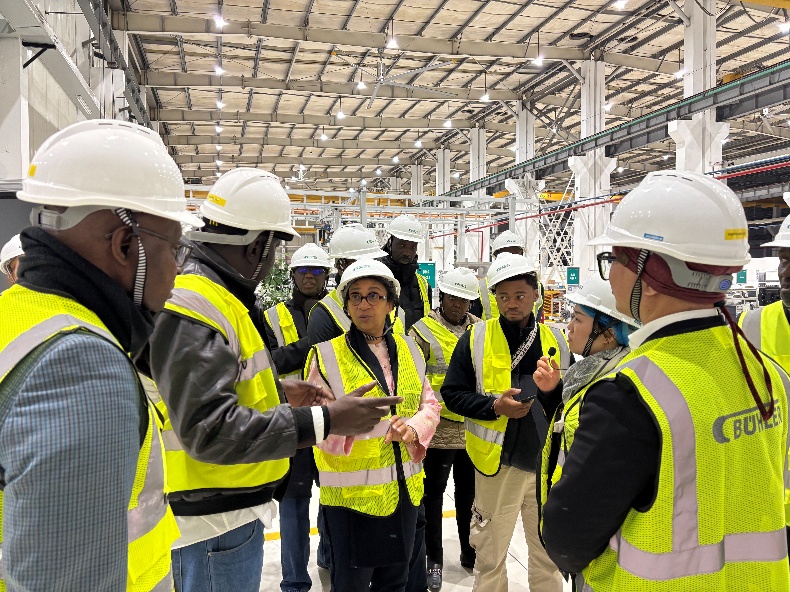
Visit to rice fortification machinery manufacturer
Sustainable Nutrition Fortification Approach
The mission began in Beijing with a policy dialogue where experts from the Institute of Food and Nutrition Development of the Ministry of Agriculture and Rural Affairs engaged with the delegation to discuss Côte d'Ivoire's fortification strategy and China’s National Nutrition Plan. The exchange introduced China’s food‑fortification policies, highlighted the role of nutrition‑sensitive agriculture, and created a platform for both countries to compare approaches and identify areas for collaboration.
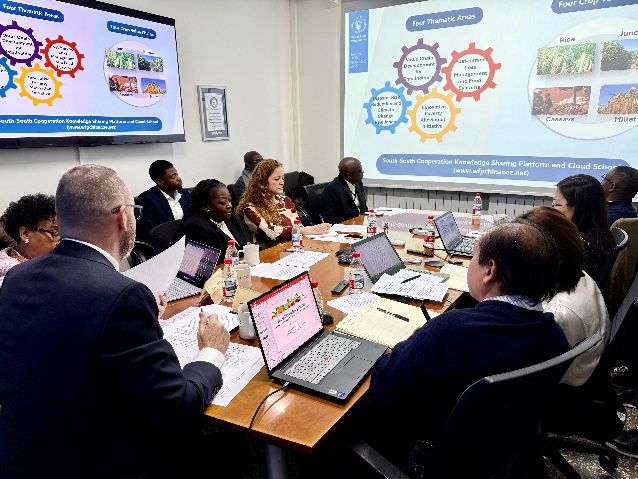
An exchange session on food fortification policies
The delegation visited fortified rice production factories and machinery manufacturers to observe extrusion‑based fortified kernel production process, understand equipment and operational requirements, and discuss product quality, sensory attributes, cost considerations, and potential returns on investment. These technical exchanges, together with discussions on China’s diversified and sustainability‑oriented food‑fortification system, offered insights into how extrusion‑based fortified rice can provide a rapid response to micronutrient deficiencies while underscoring the importance of long‑term cost‑effectiveness and a clear development pathway for sustainable national fortification efforts.
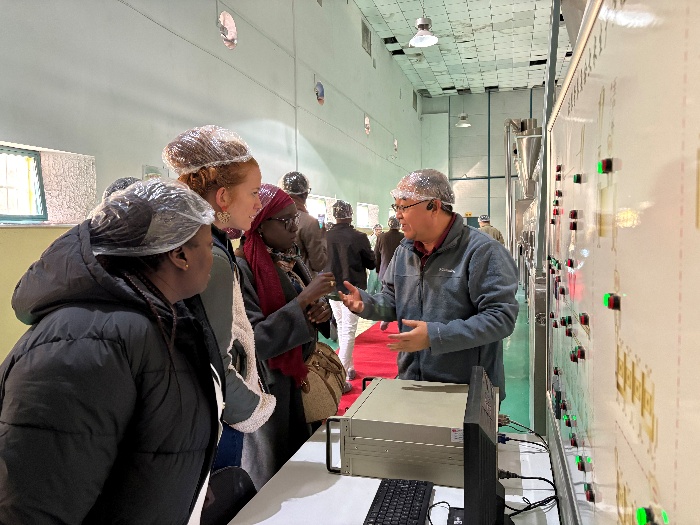
Visit to rice fortification factory
High Quality Rice Value Chain Development
The delegation visited the Hubei Academy of Agricultural Sciences and several enterprises in the area of rice value chain from field to market, including the rice breeding. The tour showcased machineries and equipment utilized in every stage of rice value chain, including cultivation, harvesting, cleaning, husking, separating, milling, grading, polishing, sorting, weighing and packaging stages, offering expertise and resources from China, as well as opportunities for international collaboration.
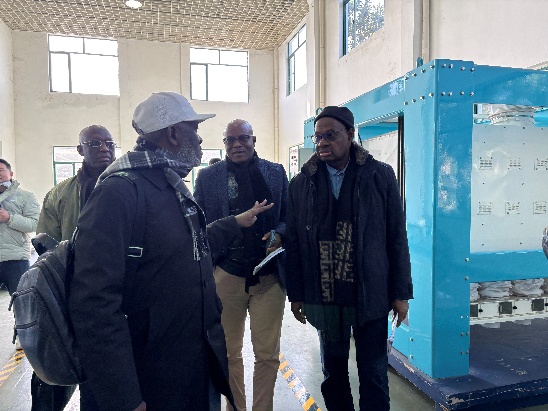
Visit to rice milling machinery factory
Hubei Province, one of China’s major rice‑producing regions, illustrates the impact of sustained modernization across the rice value chain. The delegation observed how advances in seed development, improved cultivation conditions, widespread mechanization, and upgraded storage and drying systems collectively support stable and high‑quality production and lay the efficient foundation of rice fortification industry development. The province’s strong research ecosystem further reinforces these gains, with specialized institutions contributing to continuous innovation in breeding, agronomy, and processing technologies. Field visits also highlighted integrated production and processing models in which cultivation, harvesting, storage, milling, and marketing are closely coordinated, supported by effective collaboration among enterprises, cooperatives, and farmers. These experiences offered the delegation a comprehensive view of how a well‑structured and technologically advanced ecosystem can drive both productivity and quality in the rice sector.
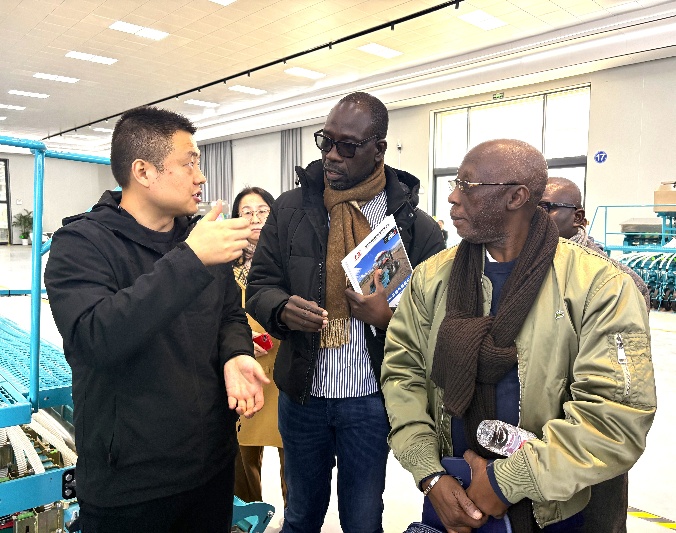
Visit to rice production machinery manufacturer
With support from the Hubei Provincial Department of Agriculture and Rural Affairs, Côte d’Ivoire’s rice-processing enterprises also held roundtable discussions with Chinese manufacturers on equipment application and technology transfer. Participation in the 2025 Hubei Agricultural Expo further deepened their understanding of agricultural development, technological innovation, and industrial transformation in the province.
The subsequent visit to Jiangsu further deepened the delegation’s understanding of fortified kernel production and rice fortification processes, illustrating how a mature and technologically advanced rice ecosystem can underpin the development of a robust fortified rice industry.
Path Forward
Delegation leaders emphasized that China’s experience holds direct relevance for Côte d’Ivoire’s own priorities, noting that the mission enabled the delegation to gain both policy‑level insights and practical exposure to technologies and industrial practices essential for rice fortification and value chain development. They highlighted how China’s progress in industrialization, mechanization, and technological innovation offers concrete lessons for strengthening Côte d’Ivoire’s rice sector and accelerating the introduction of fortified rice. The mission also underscored the importance of stronger public–private collaboration and pointed to opportunities to deepen cooperation with Chinese partners as Côte d’Ivoire prepares for national‑level scale‑up.
Looking ahead, the visit pointed to several priority areas that will shape Côte d’Ivoire’s path toward a sustainable fortified rice ecosystem. These include continued modernization of processing capacity, stronger quality‑assurance systems, improved access to appropriate fortification equipment and inputs, and more effective coordination across the value chain. At the national level, advancing the Second‑Generation National Rice Strategy, ensuring a reliable supply of quality paddy rice, and strengthening sector organization will be essential to support both industrial performance and small‑producer integration. Together, these efforts outline a clear direction for Côte d’Ivoire as it moves toward nationwide production and adoption of fortified rice.