I. Background
Cassava peels, a byproduct of cassava processing, are often regarded as waste. Improper disposal can easily cause environmental pollution. However, cassava peels contain organic matter and mineral nutrients, making them suitable for resource recycling. By adopting standardized composting and fermentation processes, mixing cassava peels with livestock and poultry manure to convert them into organic fertilizer can enable the recycling of agricultural byproducts, reduce environmental pollution, and provide a source of organic nutrients for farmland.
II. Operational Steps
(I) Raw Material Preparation
Cassava Peel Processing: Crush the peeled cassava peels into 5-20 mm flakes using a crusher. As shown in Figure 1.
Livestock and Poultry Manure Preparation: Collect fresh (unfermented) livestock and poultry manure, such as chicken, duck, goose, and pig manure. Both dry and wet manure can be used. The best results are achieved with fresh poultry manure and cassava peels.
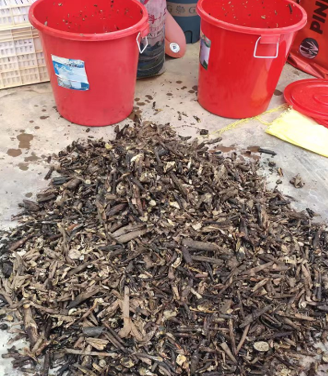
Figure 1: Peeled cassava peels
(II) Pile Mixing
Proportioning: Mix the crushed cassava peels with livestock and poultry manure (e.g., chicken, duck, or goose manure) thoroughly at a volume ratio of 10:1 to 10:2. A ratio of 10:1 indicates 10 parts cassava peels to 1 part manure. A ratio of 10:2 indicates 10 parts cassava peels to 2 parts manure.
Moisture Adjustment: Because the collection times of cassava peels and poultry manure may differ, the condition of the mixture after blending them in the above proportion will also vary. If the mixed pile is too dry, add water to adjust the moisture content to 50%. This means that after adding water, the water weight should account for roughly half of the total weight of the mixture — not simply 50% of the dry stockpile weight. This is the state where "visually the stockpile does not form clumps or stick together, and it falls apart when dropped to the ground." As shown in Figure 2.
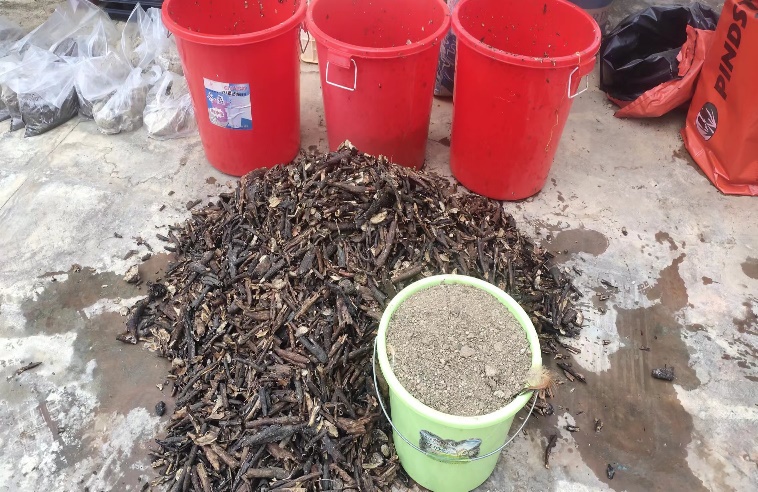
Figure 2: Mixing of piled materials
(III) Pile Construction and Fermentation
Pile Construction Method:
•For small amounts of material: Build a circular compost pile with a height of 1-2 meters. It can be piled naturally or placed in a container. As shown in Figure 3 and 5.
•For large amounts of material: It is recommended to build a windrow-style pile 2 meters wide and 1.2 meters high. As shown in Figure 4.
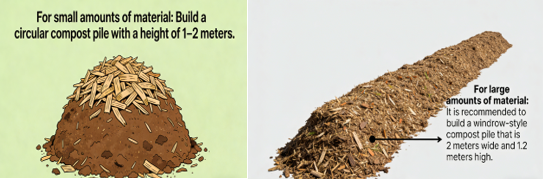
Figure 3. For small amounts of material Figure 4. For large amounts of material
Coverage Management: Cover the surface of the pile with plastic film or an appropriate layer of soil to retain heat and moisture during fermentation.
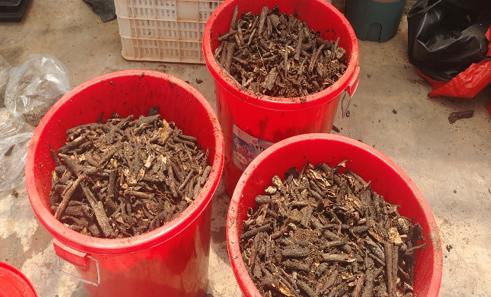
Figure 5. Ferment the mixed materials.
(IV) Turning Management
Turning Time:
•Conduct the first turning 3-5 days after the pile is constructed.
•Conduct a second turning 5–7 days after the first one.
Turning Requirements: Ensure that materials from the top, bottom, inside, and outer sections of the pile are thoroughly mixed during turning. As shown in Figure 6.
Moisture Supplement: If the pile is too dry during turning, add an appropriate amount of water to maintain proper moisture levels.
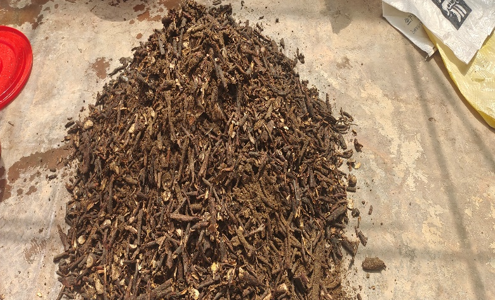
Figure 6. Turning and Mixing
(V) Maturation and Storage
Fermentation Period: The pile will be fully matured and ready for use after 20-30 days of composting.
Storage Requirements: If the matured compost is not to be used immediately, cover it with a plastic film to prevent nutrient loss caused by rainwater leaching.
(VI) Field Application
Application in Orchards: Apply 15-25 kilograms per tree, depending on the size of the tree.
Application in Vegetable and Melon Fields: Apply 500-1500 kilograms per mu (1 mu ≈ 0.0667 hectares).
Application Suggestion: Apply as early as possible to promote further decomposition in the soil.
III. Analysis of Key Links
Material Crushing: Crushing cassava peels to a suitable particle size (5-20 mm) increases the material’s surface area, thereby promoting microbial fermentation.
Carbon-Nitrogen Ratio Adjustment: Mixing cassava peels with livestock and poultry manure at a volume ratio of 10:1 to 10:2 helps adjust the carbon-nitrogen ratio of the mixture, meeting the nutritional needs of fermenting microorganisms.
Moisture Control: Adjusting the moisture content of the pile to approximately 50% is crucial for ensuring microbial activity and promoting aerobic fermentation.
Turning Operation: Regular turning improves the air permeability of the pile, making fermentation more uniform and thorough.
Maturation Judgment: The material usually reaches full maturity after 20-30 days of composting, characterized by a stable low temperature, loose texture, and absence of foul odor.
IV. Scope of Application
This technology is suitable for farms and planting bases with adequate site conditions to produce compost independently.
V. Benefits and Risks
Benefits
Resource Utilization: Converts cassava peels into organic fertilizer, achieving the resource recycling of agricultural byproducts.
Soil Improvement: Increases soil organic matter content and improves soil structure after field application.
Pollution Reduction: Reduces environmental pollution caused by the random stacking or improper disposal of cassava peels.
Cost Reduction: Provides nutrients to farmland and lowers reliance on commercial chemical fertilizers.
Risks and Precautions
Inadequate Fermentation: If turning is not timely or moisture control is improper, fermentation may be incomplete, affecting the use effect. Operate in accordance with the procedures.
Nutrient Loss: If the matured compost is stored outdoors without protection, rain leaching can lead to nutrient loss. Ensure proper covering during storage.
Improper Application: Direct application of immature compost may have adverse effects on crop growth. Ensure the compost is fully matured before field application.
Raw Material Hygiene: Livestock and poultry manure may contain pathogenic bacteria, posing hygiene risks. The high-temperature stage during fermentation helps kill some pathogens.
Conclusion
Composting cassava peels mixed with poultry manure is a feasible and environmentally friendly treatment method. By constructing appropriate composting structures—circular compost piles (1–2 m in height) for small‑scale materials and windrow‑style compost piles (2 m in width, 1.2 m in height) for large‑scale materials—effective aerobic fermentation can be achieved. This process not only reduces the environmental pollution caused by the accumulation of cassava peels and poultry manure but also converts them into stable organic fertilizer, which can improve soil structure, increase soil fertility, and promote crop growth. Therefore, the composting technology that combines cassava peels with poultry manure offers strong practical value and promising application prospects in agricultural waste recycling and sustainable agricultural development.

Category
Technical Solution
Contributor
Cassava Peel Composting Technology for Fertilizer Use
Country
Technical Solution