I. Technical Background
Cassava, the world's sixth-largest food crop, yields nearly 300 million tons of fresh tubers each year and serves as a staple food for more than one billion people in tropical regions. The crop is predominantly cultivated in Africa (50%), Asia (29%), and Latin America (20%). However, cassava’s inherently slow early growth, coupled with the rapid proliferation of diverse weed species under hot and humid tropical conditions, makes it highly susceptible to weed competition. This competition severely constrains productivity, resulting in estimated yield losses of 15-40% and substantial declines in root quality. Furthermore, the intensive and prolonged use of herbicides has driven the emergence of herbicide-resistant weed biotypes and heightened concerns over chemical residues, thereby undermining the long-term sustainability of cassava production systems. Therefore, the development and implementation of precise weed-identification tools and integrated weed-management strategies are essential for safeguarding cassava production and strengthening the resilience of food systems in vulnerable regions.
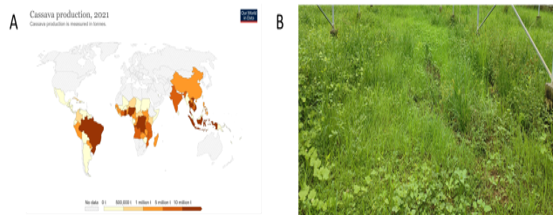
Figure 1. Global distribution of cassava production (A) and typical weed infestation in cassava fields (B)
II. Implementation Steps: Identification and Control of Major Weeds
1. Digital Preparation and Equipment Configuration
During the preparatory phase, procure one or two high-performance smartphones equipped with high-resolution cameras (at least 12 megapixels) and adequate storage capacity (a minimum 64 GB). Extension technicians shall install the Cassava Weed Precision Identification and Control Assistant mobile application on the designated smartphones. The application is powered by a deep-learning image recognition model, trained on more than 50,000 field-verified weed images, achieving identification accuracies above 90% for major weed species under real field conditions.
To ensure stable performance under weak or unstable field network conditions, download the offline database in advance. Structured training sessions shall be organized for lead farmers and local extension technicians, covering standardized photographic protocols (angle, lighting, and focal distance), app-based identification of target weed species (e.g., Polygonum multiflorum, Cyperus rotundus), interpretation of recommended control options (including agronomic measures such as tillage and mulching, and chemical options involving active ingredients, dosages, and safe application practices), and systematic recording of field data (weed species, density, growth stage, and corresponding management actions).
A brief competency assessment shall be conducted upon completion of the training to verify that all participants are proficient in application use, weed identification, and data entry, thereby ensuring consistent and reliable implementation across all demonstration sites. The application’s user interface and its use in field‑based weed identification are shown in Figure 2.
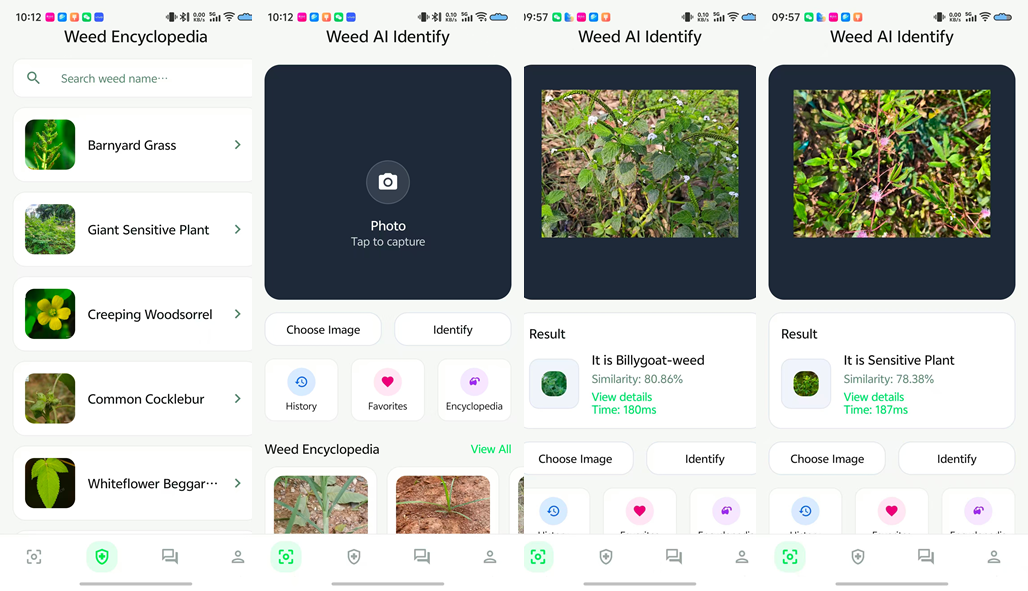
Figure 2. User interface and field application of the Cassava Weed Precision Identification and Control Assistant mobile application
To accommodate varying resource levels across different cassava-producing regions, a tiered equipment configuration is recommended:
Tier 1- Full digital setup, recommended for extension stations and large-scale farms: High-performance smartphones (≥12 MP camera, ≥64 GB storage) with the full offline database pre-installed.
Tier 2 - Basic setup, recommended for smallholder farmers in resource-limited areas: Standard smartphones or tablets with the online version of the application; alternative weed identification can be performed using printed field guides (provided as supplementary material) when network connectivity is unavailable.
Tier 3 - Minimal setup, for remote areas with no digital access: Trained lead farmers serve as local identification resources, using laminated pictorial weed identification cards and following simplified decision trees for control recommendations.
2. Operating Process
The core innovation of this technical system lies in its departure from the conventional herbicide-dependent model through the integrated application of ecological, agronomic, and bioinformatics strategies within a multidimensional weed-management framework. The technical logic can be summarized as "prevent before emergence, suppress after emergence." These measures encompass several major categories of weed‑control techniques, including mulching, targeted herbicide application, mechanical cultivation, and manual weeding (Figure 3).
Part 1: Pre-Planting Integrated Weed Suppression (Figure 3A)
Pre-planting weed management provides the foundational barrier against baseline weed pressure, reducing reliance on post-emergence herbicides through a combination of mechanical, chemical, and agronomic strategies.
An initial uniform application of non-selective herbicides clears existing weeds, followed by deep plowing to bury root systems, rhizomes, and seed bank. Subsequent mechanical sweeping removes surface residues and disrupts weed seed germination. A supplementary pre-emergence selective herbicide is then evenly applied to the tilled soil layer, creating a chemical barrier that inhibits the sprouting of residual weed seeds prior to cassava planting.
For long-term agronomic suppression, plastic film mulching is implemented in cassava rows to block sunlight and restrict weed photosynthesis, thereby preventing seedling emergence. Additionally, diversified intercropping regimes (e.g., cassava–maize or cassava–watermelon) are deployed to establish dense, multi-layer canopies. These crop mixtures compete effectively for light, water, and nutrients, naturally suppressing weed growth throughout the cassava growth cycle.
Part 2: Targeted Precision Weed Control Upon Emergence (Figure 3B)
Once weed seedlings co-emerge with young cassava plants, an intelligent digital identification system coupled with precision spot-spraying is adopted to achieve species-specific control while eliminating herbicide phytotoxicity risks.
Field images of weeds are captured and fed into a convolutional neural network recognition model. The system matches morphological features against a global weed biology database and outputs species classification via a dedicated mobile application, the Cassava Weed Precision Identification and Control Assistant. This accurately distinguishes target weeds from sensitive cassava seedlings.
Based on the automated identification results, selective herbicides are applied only to weed clusters rather than broadcast over the entire field. This spot-spraying approach effectively controls growing weeds while preventing chemical contact with cassava rootstocks and tender foliage. It ensures safe weed suppression during the vulnerable seedling phase and prevents yield losses caused by both weed competition and herbicide damage.
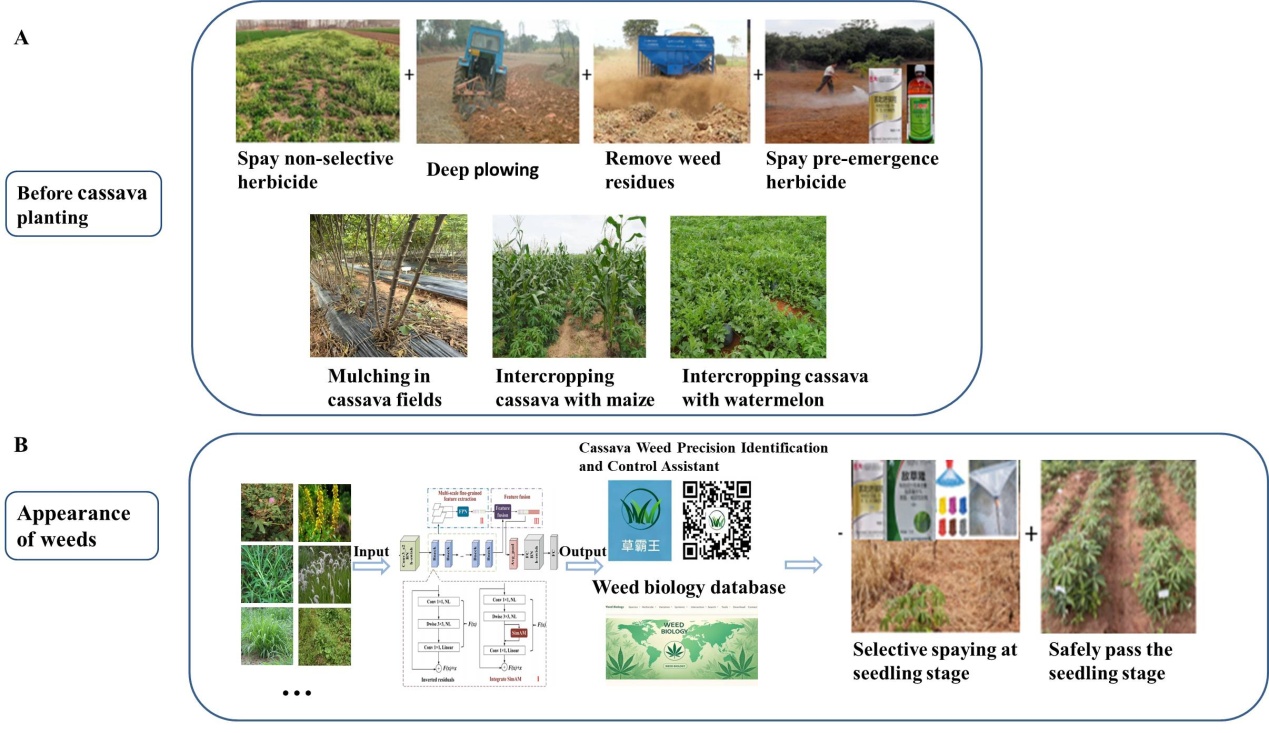
Figure 3. Integrated Weed Control Techniques in Cassava Plantations
3. Integrated Weed Management Strategies
(1) Ecological weed control technology. Develop and promote mulching techniques based on green manure and biodegradable mulch films, combined with rational intercropping and relay-cropping models to suppress weed emergence. In addition, measures such as deep plowing and fallow management should be implemented to continuously reduce the density of the soil weed seed bank in cassava fields. For deep plowing, the recommended tillage depth is 25–35 cm to effectively bury weed root systems, rhizomes, and seed bank below the germination zone. For fallow management, shallow tillage or harrowing should be conducted every 2–4 weeks at a depth of 5–10 cm using rotary tillers, mid-tillage machinery, or manual hoes to progressively deplete the soil seed bank.
(2) Covering cultivation. Common covering materials include rice straw, leaves, plant residues, and biodegradable mulch films. Immediate coverage after cassava sowing leverages the first-mover advantage to retain soil moisture, increase soil temperature, and suppress weed emergence, thereby occupying the ecological niche before weeds emerge and ensuring early crop dominance. For plastic film mulching, select transparent or black polyethylene film with a thickness of 0.008–0.012 mm. The film should be laid immediately after planting, tightly stretched over the cassava ridge, with edges firmly buried in soil to prevent wind displacement. The film remains effective for 60–90 days, covering the critical early growth phase of cassava. For organic mulching, apply crop residues (rice straw, maize stover, or grass) at a rate of 5–8 t/ha to form a uniform 10–15 cm thick layer over the soil surface.
(3) Rational crop rotation and intercropping. Rotating cassava with different crops disrupts the ecological conditions that favor specific weed communities. Intercropping with crops that exhibit strong competitive ability against weeds—such as sweet potatoes and peanuts—further reduces the available ecological space for weed growth. For intercropping systems, cassava should be planted at a spacing of 0.8–1.0 m within rows and 0.8–1.2 m between rows. Intercrops (maize, watermelon, peanut, sweet potato, or cowpea) are sown in the inter-row spaces simultaneously with or within two weeks after cassava planting. Intercrop density should not exceed 50% of its monoculture planting density to avoid excessive competition with cassava. In African smallholder contexts, locally preferred intercrops such as groundnut, cowpea, and sesame are recommended to enhance both weed suppression and food security.
(4) Deep plowing or fallow. Before cassava sowing, perform deep plowing to incorporate surface weeds, weed seeds, and stubble into the deep soil layers, preventing germination and hindering seedling emergence. During the fallow period, avoid planting crops and conduct periodic shallow tillage or harrowing (e.g., every 2-4 weeks) using machinery such as rotary tillers or mid-tillage machinery, or through manual operations, to continuously deplete the soil seed bank and reduce subsequent weed pressure. Deep plowing should reach a depth of 25–35 cm to ensure that weed seeds and vegetative propagules are buried below the germination zone. Shallow tillage during fallow periods should be conducted at a depth of 5–10 cm. In mechanized systems, rotary tillers or disc harrows are recommended; in smallholder systems, manual hoes or animal-drawn implements can achieve the same effect with consistent frequency.
(5) Reduction and precision application of chemical herbicides. Select herbicides with high efficacy, low toxicity, and minimal residue based on dominant weed populations in the field using the weed identification system Cassava Weed Precision Identification and Control Assistant. Strictly follow rotational-use principles for herbicides with different modes of action to delay the development of resistance. Guided by the concept of precision control, integrate target-recognition sensors and variable-rate spraying systems to achieve "herbicide application upon weed detection," thereby significantly reducing herbicide use. Develop comprehensive weed-control technologies that combine soil treatment, seedling-stage safe spraying, and mixed formulations to enhance efficacy, ensuring safe and efficient weed control while effectively mitigating environmental pollution caused by herbicide misuse. When rainfall occurs within 6 hours after application, re-application at 50% of the original dosage is recommended to compensate for wash-off. For spot-spraying, the nozzle should be directed only toward weed clusters, maintaining a spray volume of 150–300 L/ha for ground equipment and 30–50 L/ha for aerial applications, ensuring thorough coverage without runoff.
For the AI identification system, users should note that recognition accuracy >90% applies to mature weeds (≥4–6 leaves) captured under adequate natural lighting (sunny conditions, 9:00–16:00) with clear, focused images. Reduced accuracy is expected for seedling-stage weeds (<4 leaves), images taken under overcast skies or dense shade, damaged or overlapping leaves, and rare locally endemic species. In such cases, users should re-photograph after 3–5 days of growth, consult the app's morphological key, or contact local extension agents for on-site verification.
III. Applicability
1. Applicable region or scope
This technology is primarily applicable to tropical and subtropical cassava-producing regions, where climatic conditions support large-scale cassava cultivation. The main target areas include:
• Africa: Major cassava-growing regions across sub-Saharan Africa, including Nigeria, the Democratic Republic of the Congo, Ghana, Tanzania, and neighboring countries, where priority should be given to mulching using locally available crop residues and manual weeding during the first 8–10 weeks after planting. The precision-spraying component is recommended initially for demonstration plots and larger farms, with gradual adoption among smallholders as smartphone penetration increases.
• Asia: Key production zones in Southeast Asia (e.g., Thailand, Vietnam, Indonesia, Cambodia), South Asia (e.g., India), and southern China, where full implementation — including AI-assisted identification and variable-rate spraying — is feasible due to most farmers’ broad access to mechanized sprayers and reliable network coverage.
• Latin America: Leading cassava-producing countries such as Brazil, Colombia, and Paraguay where the system can be directly applied and integrated into existing precision-agriculture infrastructure.
These regions share similar agro‑ecological conditions-high temperatures, abundant rainfall, and long growing seasons, which make them highly suitable for the adoption and scaling of this technology.
2. The influence of climate and environmental factors
Rainfall and humidity are critical factors shaping weed dynamics in cassava fields, as they determine both the frequency and intensity of weed-emergence waves. Regions with prolonged rainy seasons and heavy rainfall typically experience substantial weed pressure. Rainfall also directly influences the performance of weed-control measures: soil-applied herbicides require adequate moisture to form an effective sealing layer, while post-emergence herbicides may lose efficacy if heavy rain occurs within six hours, necessitating re-application. Therefore, preparatory operations—such as land preparation and mulching—must be completed before the onset of the rainy season.
Wind is another critical environmental constraint. Strong winds cause severe spray drift, reducing the precision of herbicide application and increasing the risk of both cassava phytotoxicity and environmental contamination. To ensure application safety and accuracy, chemical spraying is strictly prohibited when wind speeds exceed Beaufort force 3 (approximately 12–19 km/h).
IV. Risks and Benefits
1. Cost and benefit
(1) Increased yield: Effective control of weeds can increase cassava tuber yield by 20%-50%, and even more in areas with severe weed infestation.
(2) Cost reduction: Precision herbicide application reduces chemical inputs and labor expenditure by 30%-60%, significantly lowering overall production costs.
(3) Quality improvement: Reduced weed competition promotes uniform cassava growth, improves tuber size consistency, and increases the proportion of marketable yield.
2. Risks and emergency measures
(1) Technical operational risks. Risks such as misidentification of weeds, improper calibration of precision‑spraying equipment, and errors in herbicide selection or dosage should be mitigated through standardized operating procedures, enhanced technical training, and clearly defined emergency response protocols to prevent crop damage and ensure safe operations.
(2) Climate and environmental risks. Extreme weather events, including heavy rain, persistent drought, and strong winds, may reduce herbicide efficacy or increase the risk of spray drift and phytotoxicity. Emergency measures include close monitoring of weather forecasts, adjusting application schedules, and conducting rapid post-disaster assessment and remediation to minimize losses.
V. Case Studies
The technology has been validated in demonstration bases across Hainan and Yunnan provinces of China, achieving over 90% accuracy in identifying major weed species and reducing pesticide use by 35% through its recommended control strategies. The dual-control approach—using straw mulch or biodegradable film — together with intercropping systems such as cassava-peanut and cassava-columnar grass, have been implemented for several years in Hainan, Guangxi, Jiangxi, and Anhui provinces of China. These practices have reduced labor requirements by 3-5 workers per mu (≈0.067 hectares) and saved CNY 200-360 per mu (≈USD 430-770 per hectare).
In addition, the local standard of Hainan Province, Technical Guidelines for Weed Control in Cassava Plantations (DB46/T606-2023), has been published and widely adopted across partner bases and has demonstrated consistent and reliable effectiveness in practical applications.
VI. Conclusion
Weeds pose a major threat to cassava production, as they can severely reduce both yield and quality. Excessive reliance on herbicides to control weeds may also lead to ecological risks. The integrated weed-control technology introduced in this paper effectively addresses these challenges by combining ecological, agronomic and precise chemical approaches. Using a mobile application, farmers can accurately identify major weed species and then apply appropriate control measures, including field mulching, intercropping, deep plowing and targeted herbicide application.
This technology has been tested in cassava-growing regions such as Hainan and Yunnan provinces in China. It not only improves the accuracy of weed control but also reduces pesticide use and production costs while increasing cassava yield. Overall, it provides a practical and scalable technical solution for the sustainable development of the global cassava industry and is suitable for adoption across major cassava-producing regions around the world.

Category
Technical Solution
Contributor
Techniques for Identification and Control of Major Weeds in Cassava
Country
Technical Solution