1. Introduction
Vermicelli is a typical starch-based food product produced from starch-rich crops. It is processed and formed into strips or flakes. Easy to cook and tasty, it is widely seen on dinner tables in many regions where this crop is widely consumed. Vermicelli is appreciated for its smooth, chewy texture, resistance to overcooking, high satiety and rich carbohydrate content. It is used in soups, stir-fries, hot pots, cold salads and many other dishes.
In terms of industrial value, vermicelli processing is a cost-effective way to start a business and increase income. Based on estimates from the Chinese market, the market value of vermicelli is about 5 to 8 times that of fresh cassava. It not only significantly raises the added value of agricultural products but also creates local jobs. Leveraging the abundant local cassava resources to develop vermicelli processing can effectively extend the value chain and boost the development of regional specialty economies.
Based on the forming process, vermicelli can be classified into two types: cut vermicelli and extruded vermicelli (See Figure 1 and 2). Cut vermicelli is made by slicing dough sheets, resulting in a square or rectangular cross-section and a thicker texture. Extruded vermicelli is formed by extrusion, shaped into long round or flat strips with a smoother taste.
In many regions, traditional home-based vermicelli processing still faces challenges such as low production efficiency, fragile products, cloudy soup after cooking, inconsistent taste, poor hygiene control and heavy dependence on sunny weather for drying. These limitations highlight the need for more standardized and reliable processing methods. Standardized small-scale processing technology provides an effective solution. It avoids the drawbacks of traditional methods without requiring the high investment associated with large industrial equipment, making it suitable for startup entrepreneurs, rural cooperatives and home-based processors.
This article presents a wet-processing technology for producing vermicelli using cassava starch as the main raw material, with a focus on the production methods of extruded vermicelli.
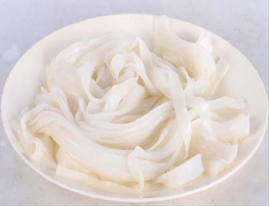
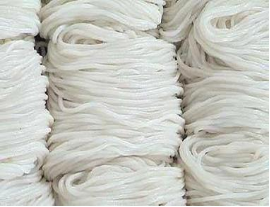
Figure 1. cut vermicelli Figure 2. extruded vermicelli
2. Raw Material Requirements
· Cassava starch that meets common industry production standards, with a moisture content of 12%-14%and an 80-mesh fineness, and pure white in appearance without visible impurities.
· Edible white vinegar
· Table salt.
· Warm water.
Once the above ingredients are prepared, you can start making cassava vermicelli. The specific quantity of each ingredient in the following operation steps follows a fixed formulationratio, and the raw material amounts need to be adjusted appropriately according to production requirements. Deviating from the required ratio will have a significant negative impact on the quality of the final product.
3. Processing Stepsof Extruded Vermicelli
3.1 Process Flow

Figure 3. Core steps of the extrusion processing method
3.2 Processing Steps
· Make the gelatinized paste.
Put 5g cassava starch, 1g edible salt and 50g warm water into a container and stir thoroughly until a uniform particle-free slurryis formed. Pour the mixed slurry into a flat tray and divide it into several small round portions, shaping each portion into a thin starch cake. Steam these starch cakes thoroughly, as shown in Figure 4, to achieve complete starch gelatinization. This step is critical for obtaining fully gelatinized paste. After steaming, take out the starch cakes and cool them to room temperature for subsequent processing.
Key Point:The gelatinized starch pasteserves as the essential binding phase in dough formation. It enables loose cassava starch powder to aggregate uniformly, ensuring smooth extrusionand producing continuous, intact vermicelli strips. The paste must be fully gelatinized; insufficient gelatinizationwill cause grainy dough and brittle vermicelli during subsequent kneading. See Figure 4.
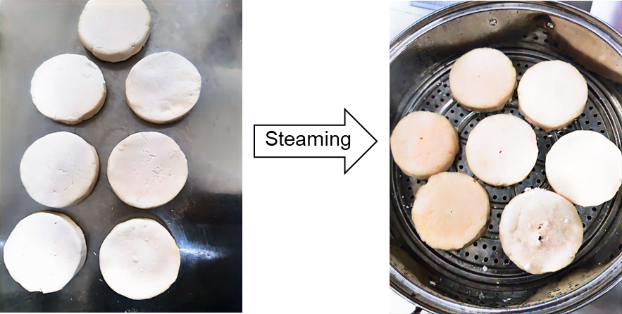
Figure 4. Steaming starch cakes as part of gelatinized paste preparation
· Knead the dough.
Put the 100g cassava starch and 30g warm water into a kneading basin, add the cooled gelatinized paste, mix it into flocculent mixture by folding and stirring, then knead and press repeatedly by hand. After the flocculent raw materials are initially kneaded into a ball, add the remaining warm water in small portions and continue kneading until the dough has a smooth surface, is non-sticky, and can be pulled into continuous strips without breaking when stretched by hand.
Key Point: Knead the dough thoroughly to ensure no dry starch particles remain; otherwise, the mold will be easily blocked and the vermicelli will be unevenly formed during extrusion.See Figure 5.
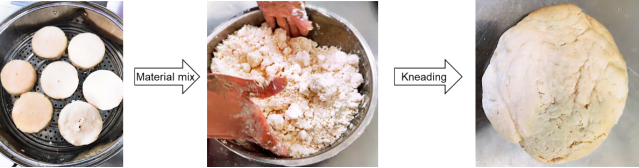
Figure 5. From steamed starch discs to a smooth, well‑kneaded dough
· Extrude to form vermicelli.
Add a sufficient amount of clear water to a pot and bring it to a rolling boil over high heat. Put the kneaded dough into a vermicelli extrusion mold with a 1-2mm aperture and press the dough evenly by hand to extrude it into boiling water in strips. After all the vermicelli is extruded into the pot, cook until it floats to the water surface, then immediately remove it from the boiling water with a slotted spoon. First, soak it in cold water containing 3% edible white vinegar for 1-2 minutes, then quickly transfer it to an ice-water bath (0-4℃) and soak for 3-5 minutes to complete setting. At this stage, fresh vermicelli is fully formed and can be cooked directly using the cooking methods described in Section 6.2 Cooking Applications. If long-term storage is required, proceed with the subsequent cooling and drying procedures.
Key Point: Keep the boiling water in a continuous rolling boil; cold water with white vinegar prevents the vermicelli from sticking, and ice-water soaking improves the chewiness and smooth taste of the vermicelli.See Figure 6.
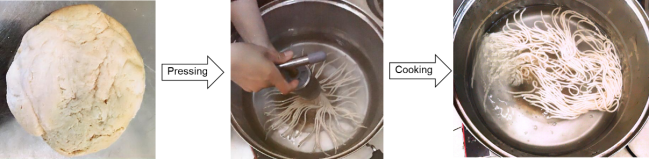
Figure 6. Extruding the dough into boiling water to form vermicelli, followed by cooling
· Low-temperature freezing.
Remove the vermicelli from the ice-water bath, straighten it gently, and hang it evenly on a special drying rod. Place therod into a freezing device for low temperaturefreezing. Immediately after freezing, gently separateany vermicelli strands that adhered to each other by hand to avoid breakage. See figure7. This operation must be performed at this stage to prevent the strands from becoming firmly bonded by the surface ice layer, which would greatly increase the risk of breakage duringlater drying.
Key Point: The freezing temperature should not be too low (below -10℃ may cause cracking) or too high (above 0℃ will fail to achieve proper freezing and setting).
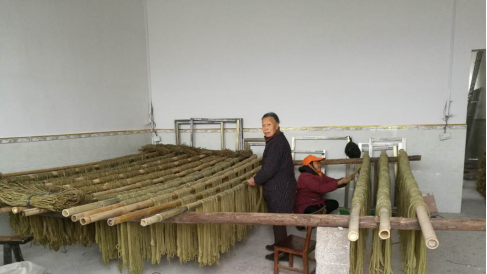
Figure 7. Separating and hanging the vermicelli strandsafter freezing to prevent adhesion before drying
· Dry the vermicelli.
Spread the vermicelli evenly on the drying yard or on the shelves in the drying room. For natural drying, choose a sunny day and dry for 6-8 hours, turning the vermicelli regularly. See Figure 8.
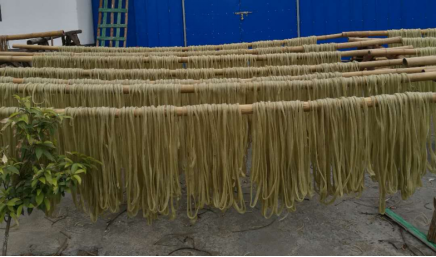
Figure 8. Natural drying
4. Key Technical Points
4.1 Gelatinization Temperature and Cooking Degree Control
During gelatinization of the starch paste, keep the steam temperature steadily at 100 ℃. Assess the cooking degree by observing the translucency of the gelatinized paste—translucent indicates optimal stateof gelatinization, which ensures the vermicelli will be chewy and fully cooked.
4.2 Drying Condition Control
For natural drying, prevent the vermicelli from getting rained or damp. For drying-room processing, ventilate regularlyto maintain uniform airflow.
4.3 Hygiene control
Clean and disinfect all equipment regularly using food-grade disinfectants. Processing staff should wear clean work clothing and glovesthroughout operation. Keep raw materials strictly from finished products to prevent cross-contamination.
5 Applicable Scenarios
This technology is suitable for startup small workshops with an investment of 7,000 to 14,000 USD and a floor area of 50 to 100 square meters, typically operated by 3 to 5 people with a daily output of 50 to 100 kg of cassava vermicelli. It’s also well suited for rural cooperatives, small-scale catering support processing, and the upgrading of home-based processors. The vermicelli can be sold through farmers’ markets and e-commerce platforms or customized for restaurantuse.
6. Product Characteristics and Cooking Applications for Extruded Vermicelli
6.1 Nutritional and Sensory Characteristics
Cassava vermicelli is rich in carbohydrates, dietary fiber, protein, and essential minerals such as calcium, magnesium, iron, potassium, phosphorus and sodium. Its nutritional value lies in replenishing the nutrients and energy the human body needs. Regular consumption provides carbohydrates, fiber, protein and various trace elementsthat help maintain normal physiological functions of the human body.
Cassava vermicelli also offers desirable sensory qualities. It is soft, smooth and tender, delivering a fresh and pleasant taste.In addition, it has an excellent ability to absorb flavors, readily taking in the rich tastes of various delicious soups.
6.2 Cooking Applications
Dried vermicelli should be soaked in warm water for 10–15 minutes until fully softened before cooking. It is widely used in stir-fries, hot pot, noodle soup and cold mixed dishes. For hot dishes, blanch the softened vermicelli in boiling water for 2–3 minutes to reduce the subsequent cooking time. For cold salads, briefly blanch the vermicelli and rinse with cold water to maintain a smooth and chewy texture.
7. Conclusion
The cassava starch vermicelli processing technology presented in this document provides a practical and easy‑to‑operate method for producing high‑quality extruded vermicelli. Through clearly defined procedures and essential technical control points, the technology enables stable and consistent production without requiring complex or expensive equipment. Mastering this technology allows producers to achieve reliable and uniform product quality using refined cassava starch. Its standardized operations are easy to learn and implement, and the method supports flexible adjustment of output, making it suited for small food businesses, rural cooperatives, and local specialty food workshops.
Overall, this processing technology provides a low‑cost, scalable, and reliable approach for producing high‑quality cassava starch vermicelli, supporting both small‑scale entrepreneurship and the development of regional specialty food industries.

Category
Processing Technology for Cassava Starch Vermicelli
Contributor
Processing Technology for Cassava Starch Vermicelli
Country
Technical Solution