I. Technical Background and Overview
The cassava–chili pepper strip intercropping system addresses the limitations of cassava monoculture in dryland environments, including low economic returns, early-stage soil erosion and underutilization of lightand heat resources. Under wide row spacingconditions,cassava shows slow early growth and delayed row closure, creating well-ventilated and well-lit inter-row spaces which can be effectively used for chili pepper cultivation. Through scientifically optimizing crop spatial arrangements, the system enhances overall resourceuse efficiency and increases land productivity per unit area. Field evidence demonstrates that the cassava-chili strip intercropping model significantly raises the multiple cropping index and improves economic returns, providing a practical and sustainable technical framework for cassava cultivation in dryland ecosystems.
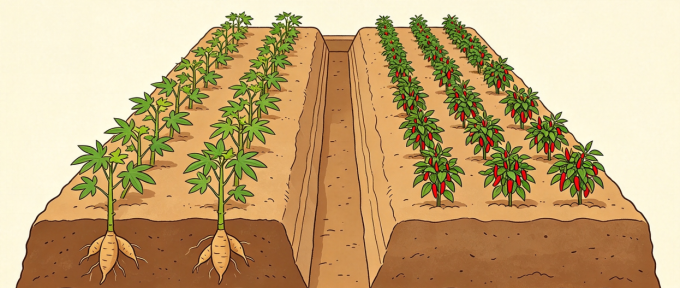
Figure 1. The planting mode: Cassava and Chili Pepper
II. Implementation Measures and Steps
1. Preparation Stage
(1) Site selection and land preparation: Choose a flat or gently sloping field with deep soil and good drainage. Before planting, till the soil to a depth of 25-30 cm, then level and fine it. Apply sufficient basal fertilizer during land preparation, including 22,500 kg of well-decomposed farmyard manure and 600-750 kg of compound fertilizer per hectare. After fertilization andsoil refinement, prepare the planting beds by forming large ridges using machinery, with a 1.4 m ridge width and 0.6 m furrow width.If ridging equipmentis not available, ridges andfurrows can also be constructed manually.
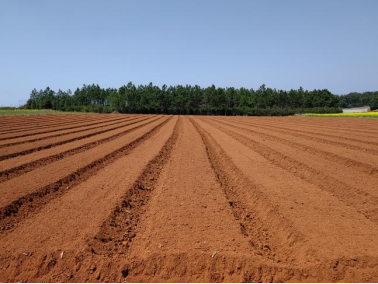
Figure 2.Field After Ridging
(2) Variety selection: Choose compact, early-maturing, high-yielding cassava varieties and disease-resistant, early-maturing, high-yielding chili pepper varieties.
2. Operation Process
(1) Planting schedule: In Jiangxi province, China, cassava is typically plantedfrom late March to early April, while peppers are transplanted in mid-to-late April. Because planting windows for cassava and peppers vary across regions, the schedules for both cassava and peppers should be adjusted according to local conditions.
(2) Field configuration: Adopt the '2+3' strip intercropping pattern, in which cassava and pepper are planted on alternating ridges - one ridge for cassava followed by one ridge for pepper. On each cassava ridge, two rows are planted with a row spacing of 0.8-1.0 m and a plant spacing of 0.6-0.8 m. On each pepper ridge, three rows are planted on the ridge surface with a row spacing of 0.4-0.5 m and a plant spacing of 0.3 m.
This spatial arrangement, in which two rows of cassava planted alongside three rows of peppers, maintains good inter-row ventilation and light penetration while ensuring an appropriate planting density. Cassava can be planted earlier than pepper or at the same time, depending on local management needs. During the co-growth period, the alternating-ridge layout ensures adequate sunlight and enhances canopy ventilation and light distribution, thereby reducing field humidity.
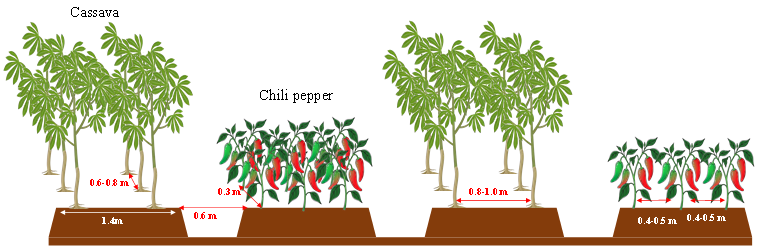
Figure 3.Schematic Diagram of Cassava-Chili Pepper Strip Intercropping
(3) Field management: Applying plastic film mulching before planting helps effectively suppress weed growth in the field. Regular monitoring should be conducted to detect diseases and pests on peppers, with timely control measures implemented against diseases such as blight, root rot, and anthracnose, as well as pests including aphids, whiteflies, and thrips. During periods of drought, timely irrigation is required to prevent peppers from experiencing water stress. Cassava management is straightforward, involving timely thinning and appropriately timed fertilizer topdressing to support strong seedlinggrowth and subsequent tuber development, adjusted according to crop growth.
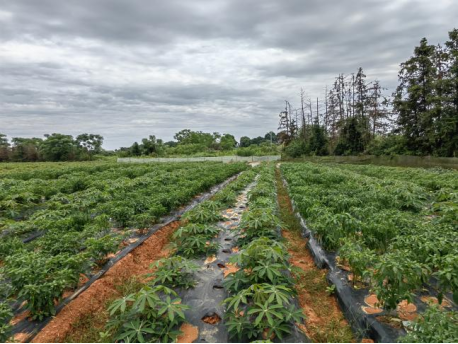
Figure 4. Demonstration Field of Cassava-Chili Pepper Intercropping
(4) Crop Harvesting: In Jiangxi province, China, peppers are harvested from May to July, while cassava is harvested in late November. Harvesting times for both crops vary across different regions. Because peppers mature continuously over the long harvesting period (May to July), timely picking is necessary to prevent overripening and to maintain yield and quality.
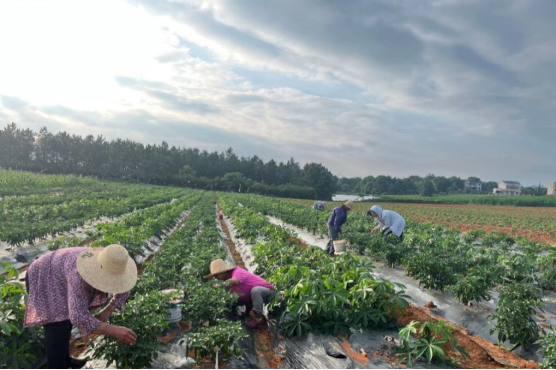
Figure 5.Chili Pepper Harvesting
III. Environmental Applicability
1. Applicable Regions
This method is mainly applicable to dryland areas in Jiangxi Province, China, as well as other regions located at similar latitudes (N 24°to N 30°) with comparable climatic and cultivation conditions. Areas with established practices of growing cassava and peppers may adopt this planting approach as a reference for local production.
2. Impact of Climate and Environmental Factors
1. Temperature: A frost-free period of more than eight months and an annual average temperature above 18℃ are required, as temperature provides the fundamental climatic conditions for cassava-pepper intercropping. Adequate heat allowsboth crops to complete their full growth cycles and achieve stable yields.
2. Water: Cassava is drought-tolerant but susceptible to waterlogging, whereas pepper is not drought‑tolerant and has a relatively high waterrequirement. Water management must therefore balance cassava's tolerance to drought and sensitivity to waterlogging with pepper's high waterdemand. Cassava has a deep root system that enables it to withstand drought, yet standing water can easily cause root rot. Pepper, by contrast, has a shallow root system and is sensitive to drought; a water deficit during flowering and fruiting can lead to substantial reduction in yield.
IV. Advantages, Economic Benefits and Risks
1. Advantages of intercropping
The cassava–chili pepper strip intercropping system improves the use of spatial and light-heat resources, forms a complementary tall-short canopy that improves aeration and light penetration, and, because pepper's short growth cycle does not interferewith cassava, allows the post-harvest expansion of space to enhance the edge effect, ultimately increasing land productivity and economic returns per unit area.
2. Production Cost and Economic Benefit
(1) Production costs: Total expenditures, including land rent, farmyard or organic fertilizers, compound fertilizers, plowing and ridge formation, chili seedlings, mulch film, and labor, amount to approximately USD 6,640 per hectare.
(2) Yield and production value: Pepper yields range from 12,000to 18,000 kg/ha, while fresh cassava yields average around 30,000 kg/ha. The combined crop production value is about USD 8,140-13,280 per hectare.
3. Risks and Emergency Measures
(1) Major risks: Market fluctuationscan cause substantial volatility in crop prices, and unsold products maylead to significantrevenue losses. Extreme weather events, including seasonal droughts and heavy rainfall, are also likely to reduce yields.
(2) Emergency measures: Establish contract farming agreements tosecure stable sales channels for agricultural products. Install supporting irrigation facilities to mitigate drought impacts and maintain timely drainage through appropriate drainage systemsto prevent waterlogging.
V. Conclusion
Planting cassava alone in dryland conditions often results in inefficient resource use and early-stage soil erosion. The cassava-chili strip intercropping system effectively addresses these constraints by utilizing cassava’s early open canopy structure to integrate pepper cultivation, achieving a more efficient and coordinated use of light, temperature, water and fertilizer resources. The "2+3" planting configuration supports strong growthof both crops. Field practice demonstrates that the system increases land-use efficiency and economic returns while reducing production risks through proper management. It provides a practical and reliable technical approach forpromoting sustainable agricultural development in drylands and is recommended for wider adoption in suitable areas.
Category
The Planting Mode of Cassava-Chili Pepper Strip Intercropping
Contributor
The Planting Mode of Cassava-Chili Pepper Strip Intercropping
Country
The Planting Mode of Cassava-Chili Pepper Strip Intercropping