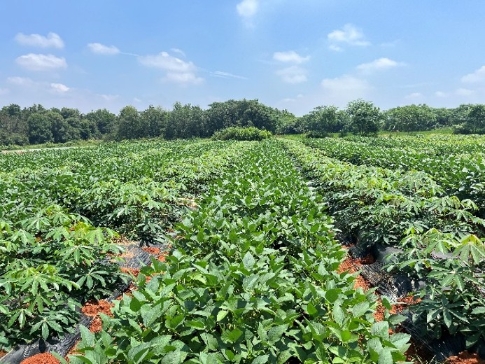
Figure 1. Cassava-soybean intercropping field
I. Technical Background and Overview
Traditional cassava monoculture often results in low land-use efficiency, inefficient utilization of light and heat resources, and reduced biodiversity, leading to limited economic returns and an increased risk of soil degradation. Cassava-soybean strip intercropping can help address these problems by establishing a planting system based on niche complementarity. As a tall-stalk crop, cassava forms vertical spatial complementarity with the shorter soybean plants. In addition, the two crops have significantly different growth durations, 8-10 months for cassava and 3-4 months for soybean, allowing for temporal complementarity in resource use. As a nitrogen-fixing legume, soybean can also contribute nitrogen to the cropping system and improve the soil microbial environment. Production practices have shown that, through appropriate spatial arrangement of the two crops, this intercropping system can effectively increase the land multiple cropping index and economic returns per unit area, promote more efficient use of light, temperature, water, heat and fertilizer resources, and help alleviate problems associated with continuous monocropping. Therefore, cassava-soybean strip intercropping offers both ecological and economic benefits and provides a practical approach to sustainable agricultural development.
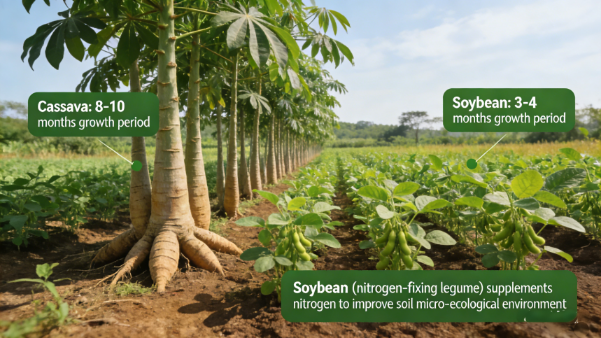
Figure 2. Interaction mechanisms between cassava and soybean
II. Implementation Measures and Steps
1. Preparation Stage
(1) Site selection and land preparation: Select gentle slopes or flat fields with deep soil layers and good drainage. Before planting, plow the soil to a depth of 25-30 cm and harrow it to a fine tilth. Apply sufficient basal fertilizer during land preparation, including about 30,000 kg of decomposed farmyard manure and 600-750 kg of compound fertilizer (N:P2O5:K2O=16%:16%:16%) per hectare. Form large ridges mechanically or manually, with a ridge surface width of 1.4 m, a ridge height of 0.3 m, and a furrow width of 0.6 m.
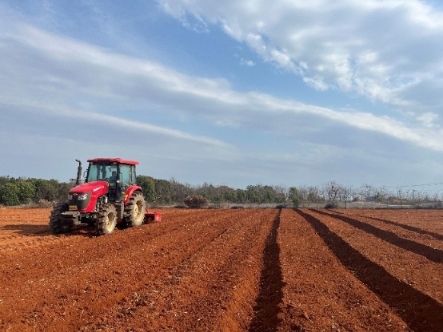
Figure 3. Mechanical land preparation and ridge formation
(2) Variety selection: Select high-yield cassava varieties with compact plant architecture. Choose disease-resistant, high-yield soybean varieties that are well adapted to local conditions.
2. Operation Process
(1) Planting time: In Jiangxi Province, China, cassava is generally planted from late March to early April, while soybean is sown from early to mid-April. Cassava should be planted when temperatures are suitable for sprouting and the risk of cold injury is low, while soybean is a warm-season, short-day crop and can be sown once the seedbed temperature stabilizes above 10°C. Planting times for cassava and soybean in other regions should be adjusted according to local conditions.
(2) Field configuration: Adopt a strip intercropping pattern with a “2+3” configuration, namely, 2 rows of cassava and three rows of soybean, to ensure good ventilation and light penetration between crop rows and maintain a reasonable planting density. Plant 2 rows of cassava on one ridge, with an intra-ridge row spacing of 0.8-1.0 m and a plant spacing of 0.6-0.8 m. Plant 3 rows of soybeans on the adjacent ridge, with an intra-ridge row spacing of 0.3 m and a hill spacing of 0.2 m, sowing 3-4 soybean seeds per hill. Arrange the cassava and soybean ridges alternately.
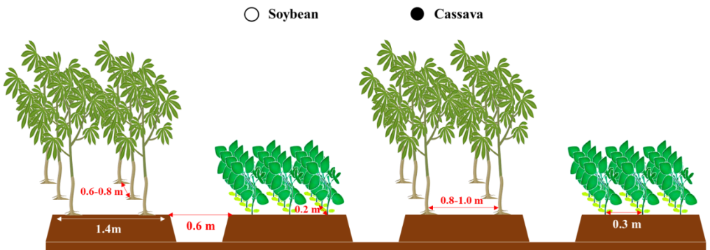
Figure 4. Schematic diagram of cassava-soybean strip intercropping system
(3) Field management: Before planting cassava, cover the cassava planting ridge surface with plastic mulch approximately 2.0 m wide and secure the edges with soil to prevent the mulch from being blown away by wind. Plastic mulching helps control weeds, facilitate field management, and improve crop yield. For cassava, field management also includes the selection and treatment of healthy stem cuttings, timely gap filling during emergence, and thinning and removal of lateral buds from the main stem during the growing period. Other measures include breaking the mulch to release seedlings and sealing the openings afterward, supplementary irrigation during dry spells in the early growth and tuber-bulking stages while avoiding waterlogging, early topdressing with nitrogen and potassium, and monitoring and control of bacterial wilt, cassava mosaic disease, red spider mite, mealybug and underground pests. For soybeans, which are not covered with plastic mulch in this intercropping system, weed control relies on pre-emergence herbicide application combined with inter-row cultivation and hand weeding; therefore, no mulch-perforation or seedling-release operation is required. Soybean management also includes seed treatment or rhizobium inoculation before sowing, timely thinning and final stand establishment, bird damage control using scarers, appropriate topdressing, and growth regulation.
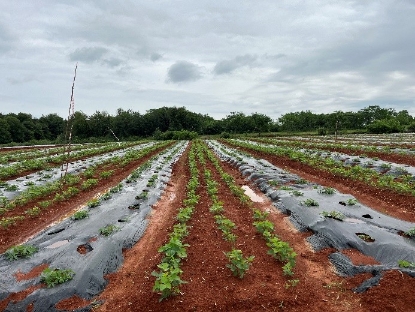
Figure 5. Cassava-soybean strip intercropping
(4) Crop harvesting: In Jiangxi Province, China, soybean is generally harvested in mid-to-late July, while cassava is harvested in late November. Soybean is generally ready for harvest when about 80–90% of the leaves have naturally fallen, the stems and pods have turned yellow to brown, the pods have developed the mature color characteristic of the variety, and the seeds are plump and firm. A rattling sound can also be heard when the plants or pods are shaken. Grain moisture content should generally decrease to about 15–25% for mechanical harvesting or 13–14% for optimal grain quality. Harvesting too early may result in immature, high-moisture seeds with poor filling, while harvesting too late increases the risk of pod shattering and field losses. Cassava is generally ready for harvest when the skin of the tuber becomes darker and rougher and can be easily peeled off by firm rubbing, above-ground growth has essentially ceased, and tuber starch content has reached its peak. Harvesting too early results in low starch content, whereas harvesting too late increases lignification and fiber content. Harvest times for cassava and soybeans vary among regions and should be adjusted according to local conditions.
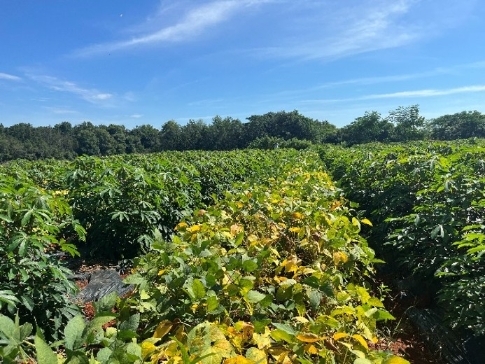
Figure 6. Soybean ready for harvest in a cassava-soybean intercropping system
III. Applicability Conditions
1. Applicable Region
This intercropping pattern is mainly suitable for Jiangxi Province, China, and regions at similar latitudes with comparable agroclimatic conditions, and may also serve as a reference for other regions. Jiangxi Province lies approximately between 24°29′ and 30°04′ N latitude and 113°34′ and 118°28′ E longitude. It has a humid subtropical monsoon climate, with a mean annual temperature of about 18°C, annual precipitation of approximately 1,600–1,700 mm, and a frost-free period of about 270 days.
2. Effects of Climate and Environmental Factors
(1) Temperature: Cassava generally requires a frost-free period of more than 8 months and a mean annual temperature above 18℃, with optimal growth at 25-29℃. Stem cuttings require a minimum temperature of 14-15℃ for sprouting; growth slows at 14℃ and stops with cold injury below 10℃. Tuber bulking is optimal at 22-25℃, while temperatures below 5℃ may cause tuber necrosis. Soybean grows best at a mean summer temperature of 24–26°C, while growth stalls below 14°C. Germination can begin at 6-8℃, indicating greater tolerance of low temperatures during germination; however, soybean is considerably more temperature-sensitive during the reproductive stage. Night temperatures below 15℃ during floral initiation may delay or even prevent flowering, while sustained temperatures above 33-35℃ during flowering and pod set can substantially increase flower and pod abortion, thereby reducing pod number and seed yield.
(2) Water availability: Cassava is drought-tolerant but sensitive to waterlogging, whereas soybeans are relatively sensitive to drought. Cassava can grow under annual rainfall ranging from 600 to 6000 mm but performs best with 1000-2000 mm of evenly distributed rainfall. It is usually grown in well-drained soil in areas with annual rainfall exceeding 1,000 mm. Flooding for even a few days during tuber initiation and bulking can cause root rot and severe yield loss. Although cassava can produce a crop with as little as 500–650 mm of rainfall, it is most sensitive to soil water deficit during the first three months after planting, when drought reduces leaf area, stomatal conductance and storage-root initiation. Supplemental irrigation during rainless periods can substantially increase root yield. Soybean generally performs best with 400–700 mm of water during the growing season, with yields declining when rainfall falls below 400 mm or above 700 mm. Approximately 62% of total water use occurs from flowering through pod filling. Drought during flowering can reduce yield by approximately 15–55%, while drought during grain filling can reduce yield by 24–60%; the later the stress occurs and the longer it persists, the greater the yield loss. Soybeans are also sensitive to short-term waterlogging, particularly at the full-pod stage, when even brief soil saturation can reduce pod number and yield, largely due to nitrogen deficiency and impaired nodulation.
IV. Economic Benefits and Risks
1. Production Costs and Economic Benefits
(1) Production costs: Based on 2023–2024 price levels in Jiangxi Province, China, the total production cost is approximately USD 3,975 per hectare, including land rent, compound fertilizer, land preparation and ridge formation, soybean seed, plastic mulch, mechanical harvesting, and labor.
(2) Yield and production value: Soybean yield is approximately 2,250 kg per hectare, while fresh cassava yield is approximately 30,000 kg per hectare. Based on 2023–2024 farm-gate prices in Jiangxi Province, the total production value is approximately USD 5,550 per hectare.
2. Risks and Emergency Measures
(1) Major risks: Crop prices may fluctuate significantly due to market conditions, and difficulties in selling agricultural products may adversely affect revenue. Extreme weather events, such as seasonal droughts and heavy rainfall, may also lead to yield losses.
(2) Risk Mitigation Measures: Enter into agricultural production and purchase agreements to help secure stable market channels for agricultural products. Provide adequate irrigation facilities to mitigate drought impacts and ensure timely drainage through appropriate drainage systems during periods of excessive rainfall.
V. Conclusion
In summary, cassava-soybean strip intercropping is a simple and cost-effective planting system that makes more efficient use of land, sunlight and water resources than cassava monoculture. The different plant heights and growth durations of cassava and soybean provide spatial and temporal complementarity, helping to reduce competition for resources and increase overall land productivity and economic returns.
The system is relatively easy to implement, involving the selection of suitable land and varieties, timely planting of cassava and soybean according to local climatic conditions, appropriate field management measures such as weed control and bird damage prevention, and harvesting of both crops at maturity.
The system is suitable for warm areas with a frost-free period of more than 8 months and well-drained soil. Potential risks include market price fluctuations and yield losses caused by drought or heavy rainfall. These risks can be mitigated through production and purchase agreements and appropriate irrigation and drainage facilities.
Based on production practice in Jiangxi Province, this intercropping system may serve as a practical reference for farmers in Africa and other regions with similar agroclimatic conditions who seek to improve land-use efficiency and farm income without relying on complex technologies or high input costs.
Category
The Planting Mode of Cassava-Soybean Strip Intercropping
Contributor
The Planting Mode of Cassava-Soybean Strip Intercropping
Country
Technical Solution