I. Technical Background and Overview
Traditional cassava monoculture faces challenges, including low ground coverage during the early growth stage, severe soil erosion, inefficient utilization of light and heat resources, and limited economic returns. The cassava-winter melonstrip intercropping model serves as an efficient intercropping system that promotes ecological niche complementarity and optimizes the spatial and temporal distribution of cassava and winter melon. Through appropriate spatial arrangementof the two crops, this model makes more efficient use of light, temperature, water, heat, and fertilizer resources, thereby significantly improving land productivity per unit area. Cassava is a tall crop typically planted at relatively wide row spacing. Its slow early growth and late canopy closure leave sufficient space between rows, with good ventilation and light penetration, creating favorable conditions for winter melongrowth. In this system, upright cassava plants utilize light and heat resources in the upper canopy, while creeping winter melonplants cover the ground, effectively suppressing weed growth and reducing soil erosion. Adapted to the climate characteristics and soil conditions of Jiangxi Province, China, this intercropping model has been systematically studied, demonstrated, and promoted over many years. The cassava-winter melonstrip intercropping model increases the multiple cropping index of dryland areas, improves economic returns per unit land area, and helps control soil erosion, providing an efficient cropping system for sustainable development of agriculture.
II. Implementation Measures and Steps
1.Preparation Stage
(1)Site selection and land preparation: Select well-drained sloping or flat land with deep soil that has not been used for growing melon crops in the previous three years. Before planting, till the soil to a depth of 25-30 cm, break up the soil clodsand level the field. Apply sufficient basal fertilizer during land preparation, including 15,000-30,000 kg of well-decomposed farmyard manure and 600-750 kg of compound fertilizer (N:P2O5:K2O=16%:16%:16%) per hectare.
Use machinery to form large ridges 1.4 m wide and 0.3 m high, separated by 0.6-m-wide furrows, for the cassava-winter melon intercropping system. Along the centerline of each ridge, dig planting holes for winter melon at intervals of 1.5-2.0 m. Each planting hole should be approximately 0.25 m long, 0.25 m wide, and 0.20 m deep. Apply well-decomposed farmyard manure to the planting holes about 15,000-30,000 kg per hectare.
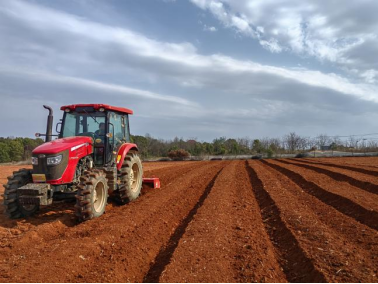
Figure 1. Mechanical land preparation and ridge formation
(2)Variety selection: Select compact, early maturing, and high-yielding cassava varieties and disease-resistant, early maturing, and high-yielding winter melon varieties.
2.Operation Process
(1)Planting schedule: In Jiangxi Province, China, cassava is generally planted from late March to early April, while winter melon is transplanted in early April. As suitable planting times for both crops vary by region, the planting schedule should be adjusted according to local climatic and growing conditions. Cassava should be planted when temperatures are warm enough for sprouting and growth, with sprouting beginning at 14–15 °C. Winter melon should be transplanted during warm conditions suitable for its growth. Local rainfall and soil moisture conditions should also be considered when determining the appropriate planting time.
(2)Field configuration: A strip intercropping pattern is adopted, using a “2+1” configuration comprising two rows of cassava and one row of winter melon, to ensure good ventilation and light penetration between the crops while maintaining a reasonable planting density.Cassava and winter melon are planted on alternating ridges. Each cassava ridge is planted with two rows of cassava, with a row spacing of 0.8-1.0 m and a plant spacing of 0.6-0.8 m. Winter melon is planted in a single row along the center of each winter melon ridge, with a plant spacing of 1.5-2.0 m.
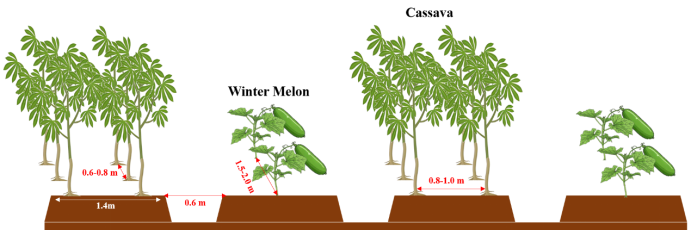
Figure 2. Schematic diagram of cassava-winter melon strip intercropping system
(3) Field Management:After transplanting the winter melon seedlings, cover the roots with soil and water the seedlings. Then install low plastic tunnels over the seedlings, keeping the seedlings centered beneath the plastic film. After transplanting, keep the tunnels covered for about 15 days. When the temperature inside the tunnels exceeds 30℃, open both ends for ventilation and cooling. During cold or rainy weather, close the ends to retain heat. Remove the plastic film when the outdoor temperature remains consistently above 25℃, usually in late April. After removing the film, vine pruning and fruit selection beginaccording to plant growth. For winter melon, subsequent management mainly includes vine training, removal of excess lateral shoots, retention and thinning of fruits, pinching of the growing point, topdressing, even irrigation with timely drainage, hand pollination where fruit set is poor, and control of downy mildew, powdery mildew, Fusarium wilt and sucking insect pests. For cassava, main field operations include gap filling and thinning, inter-row cultivation and weeding, supplementary irrigation during dry spells with drainage to prevent waterlogging, potassium-biased topdressing, and monitoring and control of bacterial wilt, mosaic disease, mites, mealybugs and underground pests.
Vine pruning and training: When the winter melon plants reach the 5th-7th leaf stage, retain one vigorous lateral vine and remove the other lateral shoots, maintainingone main vine and one lateral vine per plant. Train the vines of adjacentplants to grow in the same direction.
Fruit selection: Retain only one fruit per winter melon plant, selecting a fruit near the baseof the plant that develops from the second or third female flower to help ensure good fruit quality.
(4) Crop Harvesting: In JiangxiProvince, winter melon is harvested from June to July, while cassava is harvested in late November. In other countries or regions, harvest dates should be determined based on local climatic conditions, planting dates, and the actual maturity of the crops. Cassava is ready for harvest when the leaves turn slightly yellow, the older basal leaves gradually fall, the tuber skin darkens and becomes rough and peels off readily when firmly rubbed, above-ground growth nearly ceases, and the starch content reaches its peak. Winter melon is ready for harvest when most of the dense hairs on the young fruit have fallen off, the rind becomes hard and smooth and develops the characteristic mature color of the variety, and in varieties that produce it, a waxy bloom develops on the fruit surface. After the winter melon is harvested, the vinesare laid around the base of the cassava plants. This practice can effectively suppress weed growthwhile returning the vines to the field and increasing soil organic matter content.
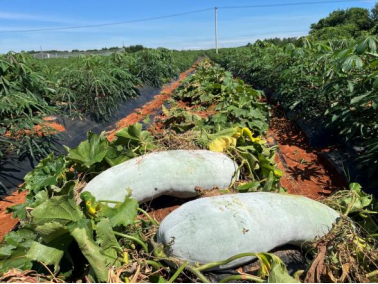
Figure 3. Winter melon at harvest in a cassava–winter melon intercropping field
III. Applicability Conditions
1.Applicable Region
This method is primarily applicable to Jiangxi Province, China, and other regions at similar latitudes with comparable agro-climatic conditions. Jiangxi Province is located approximately between 24°29′-30°04′N and 113°34′-118°28′E. It has a humid subtropical monsoon climate, with a mean annual temperature of about 18°C, annual precipitation of approximately 1,600–1,700 mm, and a frost-free period of about 270 days. The planting pattern may also serve as a reference for other regions, with appropriate adaptations to local conditions.
2.Effects of Climate and Environmental Factors
(1) Temperature: The region should have a frost-free period of more than 8 months and an annual average temperature above 18℃, providing suitable conditions for the growth of both cassava and winter melon. Cassava begins to sproutat 14–15℃ and grows optimally at 25–29℃, while tuber bulking is favored at 22–25℃. Growth slows at 14℃ and ceases with cold injury below 10℃. Cassava also requires abundant sunlight for optimal growth. Winter melonis a warm-season, heat-tolerant crop that grows optimally at 20–30℃. During the reproductive stage, temperatures of 25–30℃are favorable for growth and fruit set. Temperatures below 15℃ adversely affect growth, pollination and fruit set, while temperatures below 10℃ may cause growth to essentially stop and result in chilling injury. Winter melon also requires sufficient sunshine during the growing season.
(2)Water requirements: Cassava is drought-tolerant but sensitive to waterlogging. Its storage roots are prone to rotting when the soil remains saturated, particularly during tuber bulking. Cassava is generally suitable for areas with annual rainfall of about 1,000–2,000 mm and can adapt to a wider range of approximately 600–6,000 mm. Winter melon has a relatively high waterrequirement and requires ample and evenly distributed moisture. It is more sensitive to water shortage and is also sensitive to waterlogging. Its shallow root system makes it particularly vulnerable to prolonged soil saturation, which can kill plants within a few hours to several days. Timely irrigation should be provided when water is insufficientto meet the needs of winter melon.
IV. Economic Benefits and Risks
1. Production Costs and Economic Benefits
(1)Production costs: Based on 2023–2024 price levels in Jiangxi Province, China,the total production cost, including land rent, farmyard manure or organic fertilizers, compound fertilizers, plowing and ridge formation, winter melon seedlings, mulch film, and labor, is approximately USD 7,280 per hectare.
(2)Yield and production value: The expected yield is 60,000-75,000 kg/ha for winter melon and approximately 37,500 kg/ha for cassava. Based on 2023–2024 farm-gate prices in Jiangxi Province,the combined gross production value of thetwo crops is approximately USD 10,710-14,570 per hectare.
2. Risks and Emergency Measures
(1)Major risks: Crop prices may fluctuate considerably due to changing market conditions, while difficulties in securing buyers may result in reduced sales revenue. Extreme weather events, such as seasonal droughts and heavy rainfall, may also lead to yield losses.
(2)Risk mitigationmeasures: Establish contract farming agreements or purchase agreements to secure reliable market outlets for the produce. Ensure adequate irrigation facilities to mitigate drought risks and maintain effectivedrainage systems to prevent waterlogging during periods of heavy rainfall.
V. Conclusion
Cassava-winter melon intercropping is a simple and practical production system suitable for dryland farming. It can help address some of the limitations of traditional cassava monocropping, such as low land-use efficiency, soil erosion, weed pressure, and relatively low economicreturns. By growing cassava and winter melonstogether in an alternating ridge pattern, the system makes more efficient use of sunlight, water, soil andfertilizer resources. Cassava grows upright and utilizes light in the upper canopy, while winter melon vines spread along the ground, helping to cover the soil, suppress weeds, and reduce soil erosion.
The system is relatively easy to implement. Select well-drained land, prepare the soil through deep plowing, and apply farmyard manure or organic fertilizer. Under the growingconditions in Jiangxi Province, China, cassava is generally planted from late March to early April, while winter melon is transplanted in early April. In other regions, planting and harvesting schedules should be adjusted according to local climatic conditions, crop varieties, and crop maturity.A “2+1” configuration,consisting of 2 rows of cassava and 1 row of winter melon, is adopted. This system is primarily suitable for warm regions with a long frost-free period. In other areas, the planting schedule and field management practices should be adapted to local agro-climatic conditions.
The intercropping system can increase overall crop production and improve economic returns per unit area. Potential risks include market price fluctuations and adverse weather conditions. These risks can be mitigated through measures such as establishing purchase agreements and providing adequate irrigation and drainage facilities. Overall, the system offers a practical approach to improving land-use efficiency, increasing farm income, and reducing soil erosion, and can provide a useful reference for smallholder farmers with suitable growing conditions.
Category
The Planting Mode of Cassava-Winter Melon Strip Intercropping
Contributor
The Planting Mode of Cassava-Winter Melon Strip Intercropping
Country
Technical Solution